The first generation of SaaS AI features shipped fast. Founders saw the opportunity, integrated a model API, wrapped it in a product surface, and got it in front of users. The second wave of SaaS AI features is shipping differently -- not because founders have become more cautious, but because the first wave taught expensive lessons about what happens when AI features operate without governance infrastructure.
The pattern is consistent enough to describe. A SaaS company ships an AI feature. Users adopt it. The feature produces outputs that are sometimes excellent, sometimes wrong, and occasionally harmful. Support tickets accumulate. Enterprise prospects ask questions the sales team cannot answer. A customer in a regulated industry requests audit evidence the product cannot produce. The founder realizes that the AI feature is not just a product capability -- it is a liability vector that the company has no infrastructure to manage.
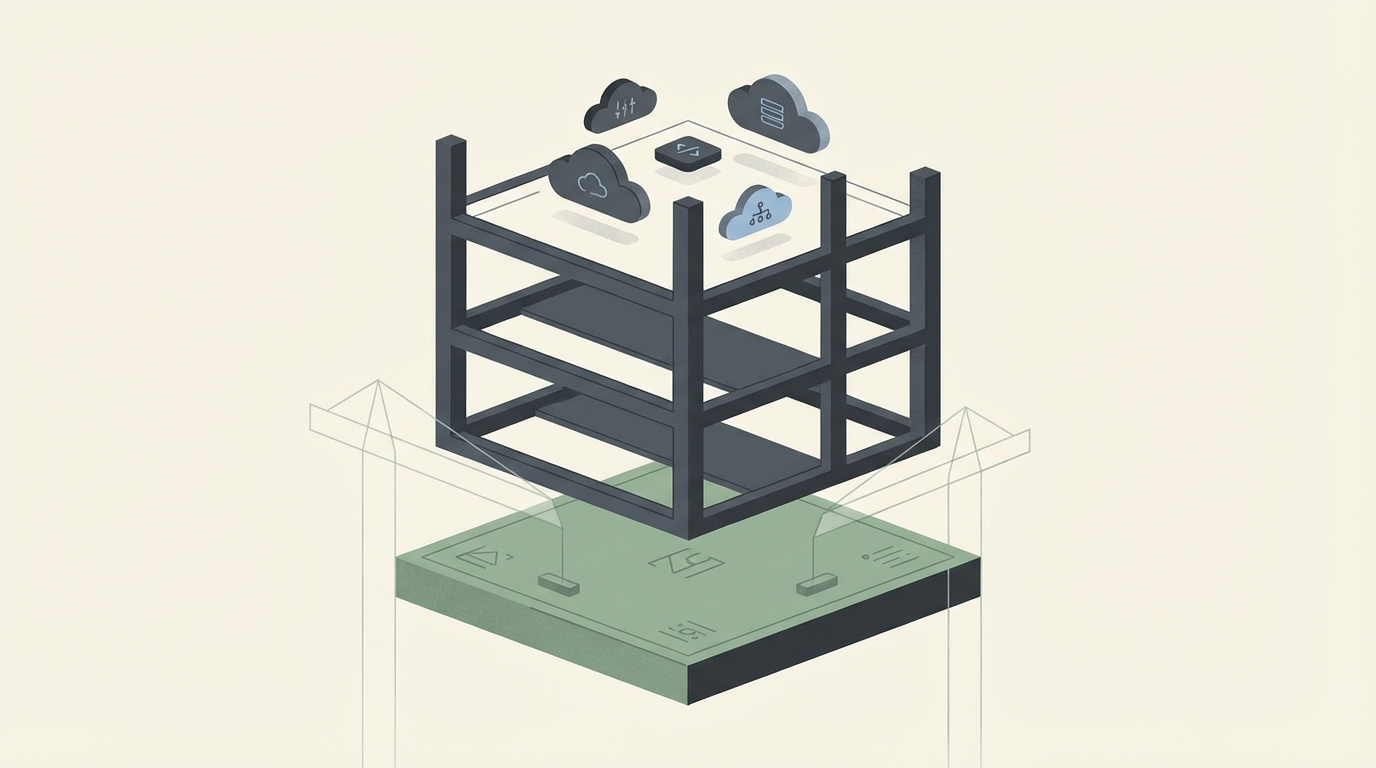
The response emerging across the SaaS ecosystem is architectural: a decision plane inserted between the AI model and the product surface. This article examines why SaaS founders are adopting this pattern, what failure modes it addresses, and what it looks like in practice.
The Three Failure Modes That Force the Conversation
SaaS founders do not add architectural layers for theoretical reasons. They add them because something broke or because something is about to break. Three failure modes consistently drive the decision to implement a decision plane.
Failure Mode 1: Inconsistent Outputs Becoming Support Tickets
An AI feature that produces different outputs for the same input on different days creates a specific kind of support ticket: the user who received a recommendation on Monday, received a contradictory recommendation on Wednesday, and wants to know which one to trust. The support team cannot answer this question because there is no record of why either recommendation was produced. The model's internal state at the time of each recommendation is gone. The prompt may have been updated between the two requests. There is no audit trail connecting input to output to logic.
These tickets are expensive. They are not "the AI made a mistake" tickets that can be resolved with an apology. They are "I cannot trust this feature" tickets that erode the product's credibility. Lenny's Newsletter has documented how top product managers are learning that consistency is a prerequisite for AI feature trust -- users will tolerate occasional errors far more readily than they will tolerate inconsistency, because inconsistency signals that the system has no governing logic at all.
A decision plane addresses this by inserting deterministic rules between the model's output and the user-facing response. The rules enforce consistency: for the same input conditions, the same rules apply, producing the same downstream behavior regardless of model variance. When the model's output is ambiguous or contradictory, the decision plane resolves the ambiguity according to explicit policy rather than passing the ambiguity through to the user. And every resolution is traced -- so when a user asks "why did I get this recommendation," the answer is retrievable.
Failure Mode 2: Unauditable Decisions Blocking Enterprise Sales
The moment a SaaS company moves upmarket from SMB to mid-market or enterprise, the AI feature becomes a sales obstacle rather than a sales asset. Enterprise procurement teams -- especially in financial services, healthcare, and government -- require documentation that the AI feature's outputs are auditable, explainable, and governed by explicit policies. They send security questionnaires with questions like: "Provide the audit log schema for AI-generated decisions." "Describe the model versioning and rollback procedure." "Who approves changes to the logic governing AI outputs?"
A SaaS product that shipped its AI feature without governance infrastructure cannot answer these questions. The audit log does not exist. The model versioning is "whatever the API provider is currently serving." The logic governing AI outputs is embedded in a prompt that was last modified by an engineer who no longer works at the company. The enterprise deal stalls at security review, and the sales team reports that the AI feature is losing deals that the rest of the product would have won.
SaaStr has documented this pattern extensively: SaaS companies that invest in AI feature development without corresponding investment in AI governance infrastructure find that their total addressable market shrinks rather than expands, because the largest and most valuable customer segments require governance capabilities the product does not have.
A decision plane provides the audit infrastructure that enterprise sales requires. Every AI-influenced decision is traced: what inputs were evaluated, what rules were applied, what version of those rules was active, and what the outcome was. The trace is immutable and retrievable. When the security questionnaire arrives, the answers are factual descriptions of existing infrastructure rather than aspirational commitments to build it.
Failure Mode 3: Inability to Roll Back AI Behavior
A SaaS product deploys a prompt change that modifies the AI feature's behavior. The change was intended to reduce a specific type of error. Instead, it introduces a new error pattern that affects a different user segment. The team needs to roll back to the previous behavior. But there is nothing to roll back to. The previous prompt was overwritten. The previous model version is no longer available from the API provider. The previous behavior was not documented -- it was emergent from a combination of prompt text, model weights, and temperature settings that cannot be reconstructed.
This failure mode is particularly dangerous because it compounds. Each change to the AI feature's behavior is irreversible in practice, which means the team becomes increasingly reluctant to make changes. Feature velocity drops. Known issues persist because the team fears that fixing one problem will create another that they cannot undo. Tomasz Tunguz has described this as the "AI maintenance trap" -- the paradox where an AI feature becomes simultaneously too important to remove and too fragile to improve.
A decision plane breaks this trap by making AI behavior changes explicit, versioned, and reversible. When the governing rules change, the previous version is preserved. If the new rules produce worse outcomes, the previous version can be restored -- not by reconstructing a lost prompt, but by promoting the previous rule version back to active status. Shadow evaluation and canary deployment allow rule changes to be tested against live traffic before full promotion, catching regression before it reaches all users.
What a Decision Plane Actually Is
The term "decision plane" describes an architectural layer that sits between the AI model's output and the product surface where users interact with that output. Its purpose is to govern what the model's output becomes before it reaches the user.
A decision plane is not an orchestration layer. Orchestration manages the flow of data between components -- which model to call, what context to provide, how to handle timeouts and retries. A decision plane manages the governance of the model's output -- what rules apply to the output, whether the output should be surfaced or suppressed, what constraints limit the output's range, and what audit evidence should be generated.
A decision plane is not a prompt engineering framework. Prompt engineering shapes the model's input to influence its output. A decision plane evaluates the model's output against explicit, versioned, auditable rules. Prompts are instructions to the model. Decision rules are constraints on what happens after the model responds.
In practice, a decision plane contains three capabilities:
- Policy rules: Named, versioned, deterministic rules that evaluate the model's output against explicit criteria. These rules encode business logic, compliance requirements, safety constraints, and product policies. They are authored by product, compliance, or domain teams -- not embedded in engineering code or prompt text.
- Decision traces: Structured, immutable records of every evaluation -- what inputs were considered, what rules were applied, what the outcome was, and what version of each component was active at the time. These traces serve as the audit trail for every AI-influenced decision the product makes.
- Safe rollout: A staged deployment process for rule changes -- draft, shadow, canary, active -- that allows new rules to be tested against production traffic before full deployment, with automated metrics and instant rollback if the new rules produce worse outcomes.
a16z's analysis of AI product architecture describes this pattern as the natural evolution from "model-as-product" to "governed-model-as-product" -- the recognition that the model is a component of the product, not the product itself, and that the governance layer between the model and the user is where product quality, compliance, and operational reliability are actually enforced.
The SaaS-Specific Case for a Decision Plane
Every software category has its own relationship to AI governance. The SaaS-specific case for a decision plane centers on three properties unique to the SaaS business model.
Multi-tenancy requires per-tenant governance. A SaaS product serves multiple customers from a shared infrastructure. Different customers may have different compliance requirements, different risk tolerances, and different expectations for AI behavior. A healthcare customer may require that the AI feature never generate clinical recommendations. A financial services customer may require complete audit trails for every AI-influenced output. A startup customer may want maximum AI autonomy with minimal constraints. A decision plane allows per-tenant policy rules -- the same model serves all tenants, but different rules govern the model's output for each tenant's context.
Continuous deployment requires safe change management. SaaS products deploy continuously. In a product without a decision plane, every change to the AI feature's behavior -- prompt updates, model version changes, parameter adjustments -- goes directly to all users simultaneously. In a product with a decision plane, behavioral changes are expressed as rule changes that follow the safe rollout process: shadow evaluation against live traffic, canary deployment to a subset of users, promotion to full production only after metrics confirm the change is safe. This is the same discipline that mature SaaS teams apply to infrastructure changes through feature flags and staged rollouts -- applied to AI behavior.
Subscription revenue requires trust durability. SaaS revenue depends on retention. An AI feature that produces a trust-eroding incident -- an inconsistent recommendation, an unexplainable output, a compliance failure -- does not just lose a single transaction. It threatens the ongoing subscription relationship. The decision plane's contribution to SaaS economics is not a feature benefit. It is a churn prevention mechanism. Consistent, auditable, governable AI behavior sustains the trust that sustains the subscription.
What Founders Are Building: Three Implementation Patterns
The decision plane pattern is not a single architecture. It manifests differently depending on the SaaS product's domain, customer base, and regulatory exposure. Three implementation patterns appear most frequently.
Pattern 1: Output Filtering and Constraint Enforcement
The simplest implementation. The model produces an output. The decision plane evaluates the output against a set of constraint rules before it reaches the user. Constraints might include: the output must not recommend actions that exceed the user's permission level; the output must not reference specific competitors by name; the output must not generate financial projections for public companies; the output must not include personally identifiable information from other tenants' data.
This pattern is typically the first implementation step because it requires the least architectural change. The model continues to operate as before. The decision plane wraps the model's output path and evaluates each output before delivery. Teams that start here often expand to the more comprehensive patterns below as they discover additional governance needs.
Pattern 2: Decision Routing and Escalation
A more sophisticated implementation where the decision plane does not just filter the model's output but routes it through different handling paths based on the decision's consequence and the tenant's configuration. Low-consequence outputs (drafting a summary, suggesting a tag) are delivered automatically. Medium-consequence outputs (recommending a workflow change, suggesting a pricing adjustment) are delivered with a "review before applying" gate. High-consequence outputs (modifying financial data, sending external communications, changing access permissions) are routed to a human approval queue.
The tier assignments are expressed as policy rules, configurable per tenant. An enterprise customer can set all AI outputs to require human review. A startup customer can set all outputs to automatic delivery. The decision plane enforces whatever policy the tenant's administrator has configured, and traces every routing decision for audit.
Pattern 3: Full Decision Governance with Safe Rollout
The most comprehensive implementation, typically adopted by SaaS companies selling into regulated industries or serving enterprise customers with stringent compliance requirements. This pattern includes output filtering, decision routing, and the complete safe rollout lifecycle for rule changes. Every rule change goes through shadow evaluation (the new rule runs alongside the current rule against live traffic, with results compared but not yet affecting users), canary deployment (the new rule governs a small percentage of traffic while metrics are monitored), and full promotion (the new rule replaces the previous version for all traffic, with the previous version preserved for instant rollback).
Companies tracking the SaaS 50 list have noted that the full governance pattern is increasingly common among SaaS companies that have successfully moved upmarket from SMB to enterprise. The pattern is not a luxury. It is the infrastructure that enterprise procurement requires and that operational maturity demands.
The Cost of Not Having a Decision Plane
The decision plane adds architectural complexity. It requires engineering investment. It introduces a processing step between the model and the user. Founders reasonably ask whether the cost is justified.
The cost of not having one is distributed across four categories, each of which grows as the product scales:
| Cost Category | Without Decision Plane | With Decision Plane |
|---|---|---|
| Support burden | Inconsistent AI outputs generate trust-eroding tickets that support cannot resolve because there is no audit trail | Decision traces enable support to explain exactly why an output was produced and confirm it followed policy |
| Enterprise sales friction | Security questionnaire answers are commitments to build future capabilities; deals stall or die | Security questionnaire answers describe existing infrastructure; deals proceed through review |
| Change management risk | Every AI behavior change is irreversible and affects all users simultaneously | Rule changes are versioned, shadow-tested, canary-deployed, and reversible |
| Compliance exposure | No documentation of what the AI did, why, or under what policy; regulatory inquiry is a crisis | Per-decision audit trail satisfies compliance inquiries with evidence retrieval |
The pattern across these categories is consistent: the cost of not having a decision plane is low when the product is small, early-stage, and selling to non-regulated SMB customers. The cost becomes severe when the product scales, the customer base moves upmarket, and the AI feature's outputs have real-world consequences. By the time the cost is severe, retrofitting a decision plane onto a production system is significantly more expensive than building it in from the beginning.
When to Add the Decision Plane
The timing question is practical, not philosophical. A pre-revenue startup building its first AI feature does not need full decision governance. A growth-stage SaaS company closing its first enterprise deals needs it urgently. The signals that indicate the decision plane is overdue are:
- Support tickets about AI inconsistency are growing faster than the user base.
- An enterprise deal has stalled at security review because of AI-specific questions the team cannot answer.
- The team has delayed a model or prompt change because they are afraid of the consequences and cannot roll back.
- A customer in a regulated industry has asked for audit evidence that the product cannot produce.
- The team has discovered that an AI behavior change they made three months ago caused a problem they only detected last week, and they cannot determine which users were affected.
Any one of these signals indicates that the product has reached the scale where ungoverned AI outputs create more risk than the cost of governing them. The decision plane is the SaaS-appropriate architectural response: it preserves the product velocity that founders value while providing the governance infrastructure that customers, regulators, and the founder's own operational sanity require.
The founders who are building decision planes today are not the most cautious founders. They are the founders who shipped AI features first, learned what breaks without governance, and are now building the infrastructure to ship AI features that last.